Books
Discover a curated selection of books on Gender & Health available in our library. Here you will find key textbooks, reference materials, and recommended readings to enhance your understanding of Gender & Health. Use the search tools to locate specific titles, or browse our collection for inspiration.
Cultural barriers impacting women veterans' access to healthcare
by
LGBTQ mental health : international perspectives and experiences
by
LGBTQ Mental Health: International Perspectives and Experiences expands our understanding of mental health by considering the unique challenges faced by LGBTQ communities in the Majority World. Increased globalization and migration has highlighted the need for mental health clinicians to better understand these communities' experiences and needs. This book provides an overview of LGBTQ mental health in non Western countries or regions that have heretofore received little attention in the psychology literature. Chapters focus on the cultural, social, legal, political, and psychological experiences of various LGBTQ subpopulations in Peru, Colombia, Ecuador, Jamaica, Russia, Mongolia, India, Malaysia, Thailand, and sub Saharan Africa. Contributors summarize existing research on mental health outcomes for LGBTQ individuals in these countries or regions; offer key insights that challenge culturally specific conceptions of normative, LGBTQ mental health and behavior; and offer recommendations for further research and mental health practice with these populations.
Transgender and Gender Diverse Health Care: the Fenway Guide
by
The first case-based comprehensive textbook to address the unique health care needs of transgender and gender diverse adults A Doody's Core Title for 2023! Demand for state-of-the-art health care services for transgender and gender diverse communities is rapidly increasing. Transgender and Gender Diverse Health Care: The Fenway Guide offers a roadmap for clinicians to provide culturally responsive care that meets the primary, preventive, and specialty health needs of transgender and gender diverse adult patients. With the most up-to-date scientific and clinical information, this practical guide reviews new data on terminology, demographics, and epidemiology; highlights key aspects of gender identity emergence across the lifespan; and provides guidance on both hormonal and surgical gender affirmation. Applying a health-equity model of care, this invaluable resource offers a foundation for clinicians when addressing health needs of transgender and gender diverse communities. Transgender and Gender Diverse Health Care: The Fenway Guide features essential information that includes the following topics and more: The history and epidemiology of transgender and gender diverse health care Primary, preventive, and specialty care considerations for transgender and gender diverse patients Hormonal, surgical and non-medical gender affirmation Trauma-informed and gender-affirming care Behavior health, eating disorders and body positivity Reproductive health, obstetrical care, and family building Treatment of HIV and sexually transmitted infections Community building, advocacy and partnership
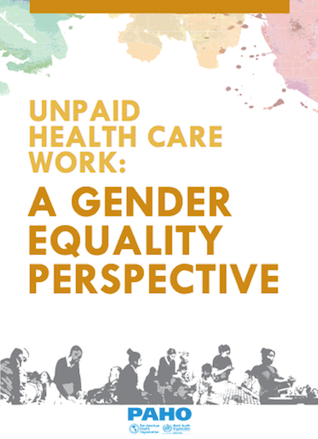
Unpaid Health Care Work
by
A debate on public goods is urgently needed in health care. Care must be recognized as a social function, as an occupation and, at the same time, as a human right--which imposes binding obligations to comply with precise standards of quality, quantity, suitability, adaptability, and accessibility, among others. It is a complex and invisible task, that may be done as part of a medical treatment, post-surgical recovery process, or permanent support in cases of chronic illness, disability, or mental health conditions. And it tends to be provided mainly in the home, by women, without remuneration. In Latin America, care has not been included in a coordinated and specific public health policy agenda but has been advanced through isolated actions--in many cases highly fragmented and heterogeneous--without a clear awareness of the public nature of care and the associated responsibility of the State. Accordingly, this document takes a gender and rights-based approach. It starts with an analysis of the main definitions of unpaid work in the health sector, and then focuses on initiatives in three Latin American countries (Colombia, Costa Rica, and Uruguay) with regard to measurement, valuation, integration, and recognition in national health systems or policies, in care models, and in time-use surveys. The conclusions propose recommendations aimed at addressing unpaid care as an essential element of social policies in general, and health policies in particular, from a gender and rights-based perspective.
Working with indigenous knowledge : strategies for health professionals
by
The lives of LGBT older adults : understanding challenges and resilience
by
Researchers and practitioners have become increasingly aware that LGBT persons have unique and varying needs. However, there is a dearth of empirical research on the specific needs and concerns of LGBT older adults and their families because sexual orientation as a research variable is basically absent in all major gerontological research studies. As a result, it is apparent that the available research on the specific needs and concerns of this "invisible" minority group must be made visible and accessible to all professionals who work with the older adult population. Thus, this book represents a comprehensive overview of cutting-edge research on LGBT older adults and their families. The primary purpose of the book is to inform researchers, practitioners, and policymakers of key research findings and describe practical implications for policy and practice related to LGBT aging individuals and families. Another key aspect of this book is its focus on the strengths and resiliency of the LGBT older adult population and the innovative ways in which individuals have overcome heterosexism and homophobia throughout their lives. The focus on strengths and resiliency is an important advancement in the field given that much of the previous literature on LGBT older adults neglected to address such topics.
LGBTQ mental health : international perspectives and experiences
by
LGBTQ Mental Health: International Perspectives and Experiences expands our understanding of mental health by considering the unique challenges faced by LGBTQ communities in the Majority World. Increased globalization and migration has highlighted the need for mental health clinicians to better understand these communities' experiences and needs. This book provides an overview of LGBTQ mental health in non Western countries or regions that have heretofore received little attention in the psychology literature. Chapters focus on the cultural, social, legal, political, and psychological experiences of various LGBTQ subpopulations in Peru, Colombia, Ecuador, Jamaica, Russia, Mongolia, India, Malaysia, Thailand, and sub Saharan Africa. Contributors summarize existing research on mental health outcomes for LGBTQ individuals in these countries or regions; offer key insights that challenge culturally specific conceptions of normative, LGBTQ mental health and behavior; and offer recommendations for further research and mental health practice with these populations.